Best practices for blogs: Subdirectory vs. subdomain [Infographic]
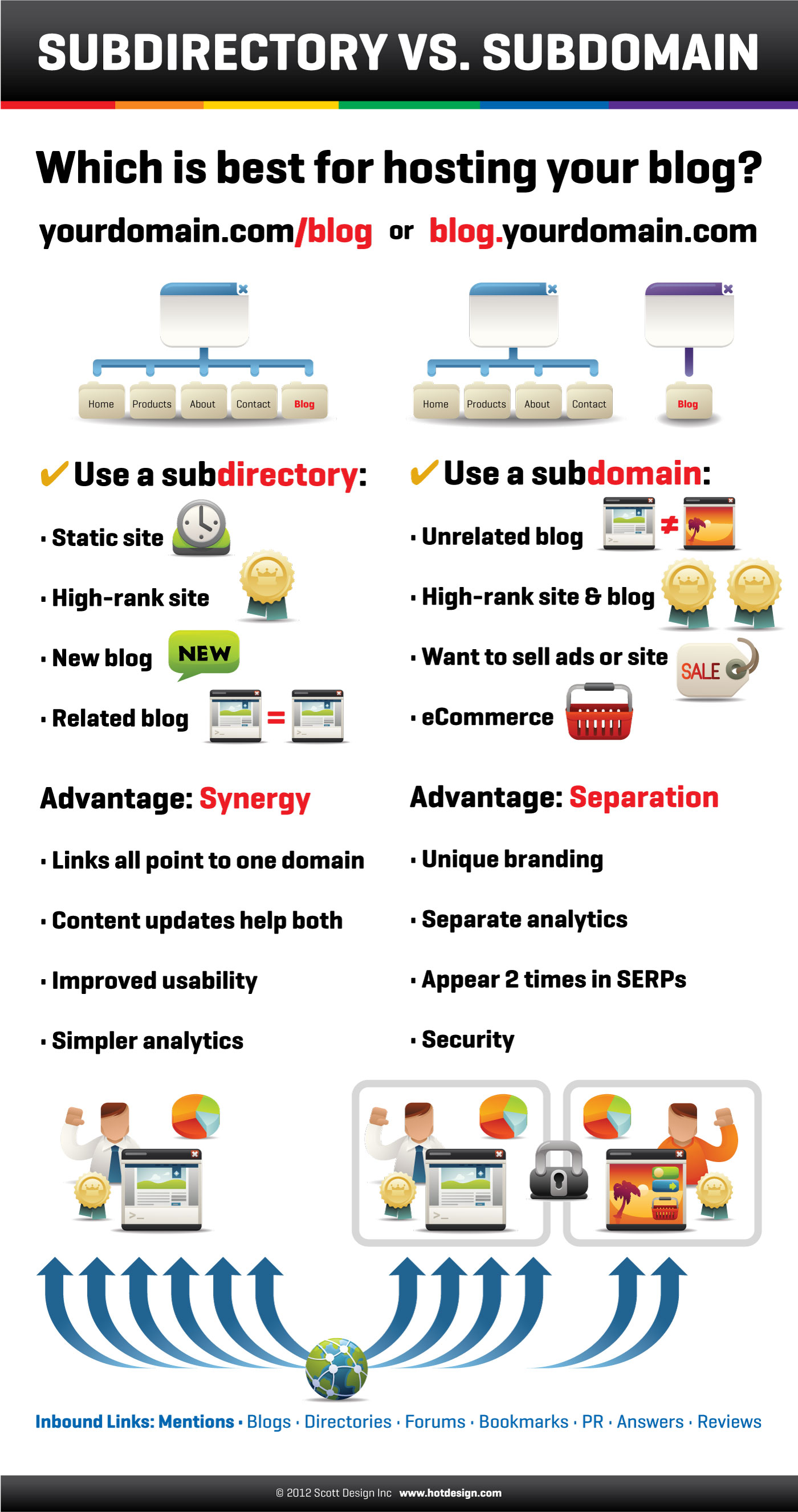
The question of whether to have your blog in a subdirectory on your site (yoursite.com/blog) or on a subdomain or microsite (blog.yoursite.com or yoursiteblog.com) comes up often. The quick answer for the best SEO is usually to have it in a subdirectory, though there are a few exceptions.
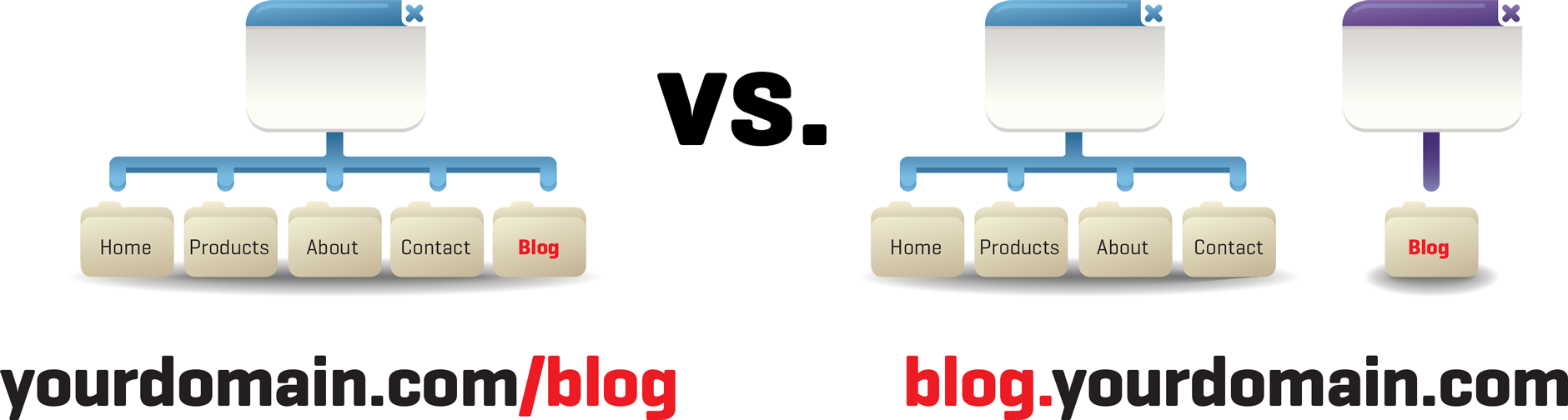
When to use a subdirectory:
- If you have a site that isn’t updated very often, the fresh content on your blog brings search engines back regularly
- If your site has high PageRank, TrustRank, and Domain Authority, your subdirectory inherits these rankings
- If your blog is new, you’ll be verified and indexed by search engines more quickly and often on an established domain
- If the content in your blog is closely related to the your site or industry, you strengthen your brand
Advantage: SYNERGY
- Consolidating content and relevance in one spot, all links, tweets, likes, and other forms of sharing point to the same domain
- Updates anywhere on site or blog keep content fresh and relevant for search engines
- Your blog inherits the authority of your site so it can rank immediately for relevant search terms
- One site architecture, one navigation scheme, and one design improve usability
- Google Analytics reports are all in one spot
When to use a subdomain/microsite:
- If the content on your blog is considerably different from that on your website and draws a different audience
- If the content on your site doesn’t complement your brand and won’t help it rate for the search terms you want
- If you want the blog to have a URL with a distinct brand and descriptive name separate from your site
- If you plan on selling advertising on your blog and want to keep blog traffic data separate from site traffic data to attract advertisers
- If you plan on selling your blog and the business associated with it
- If your blog and site already both dominate search results and you appear twice at the top of search engine results with the two sites
- If you have an eCommerce component to your blog or site and want to keep the two separate for security
Advantage: SEPARATION
- You can more easily brand your blog separately
- You can have a catchy, memorable domain name
- You can keep analytics data separate from that of your site for advertisers or buyers
- You can appear more than once in SERPs
- You can improve security by keeping eCommerce functions on a separate server
Subdirectory vs. Subdomain Infographic:
We’ve captured the main differences with some visuals to help clarify the different concepts in a simple infographic. Click to enlarge, or download a PDF.